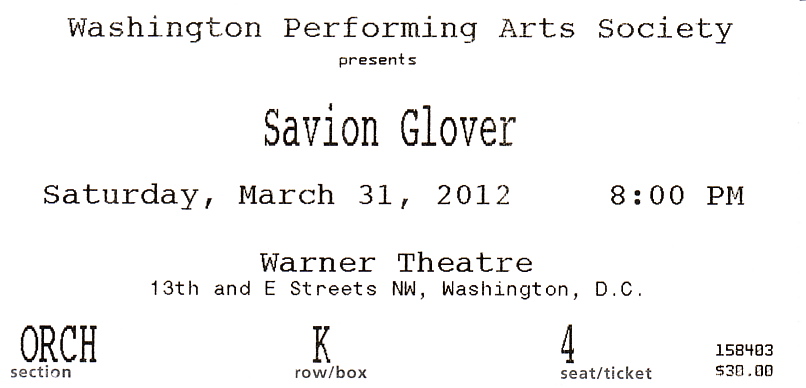
Saturday, March 31, 2012

Savion Glover at the Warner Theatre


Robb S (April 3, 2012), LIVEDC: Savion Glover @Warner Theatre, Brightest Young Things.
Squires, P. (April 1, 2012), Review: Tapper Savion Glover’s flights of brilliance are hard to follow, Washington Post.

Saturday, February 25, 2012

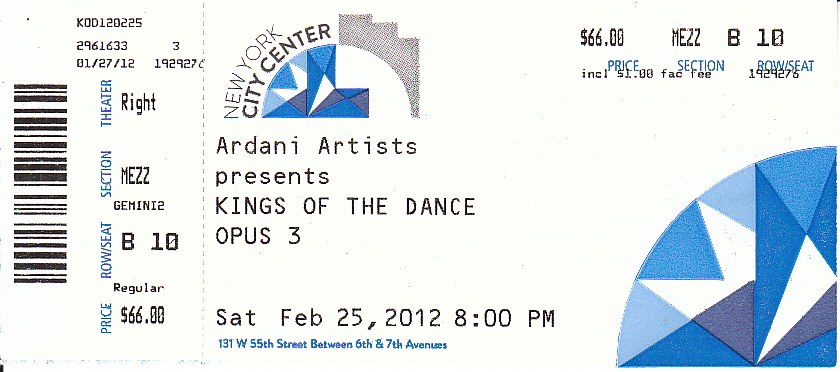
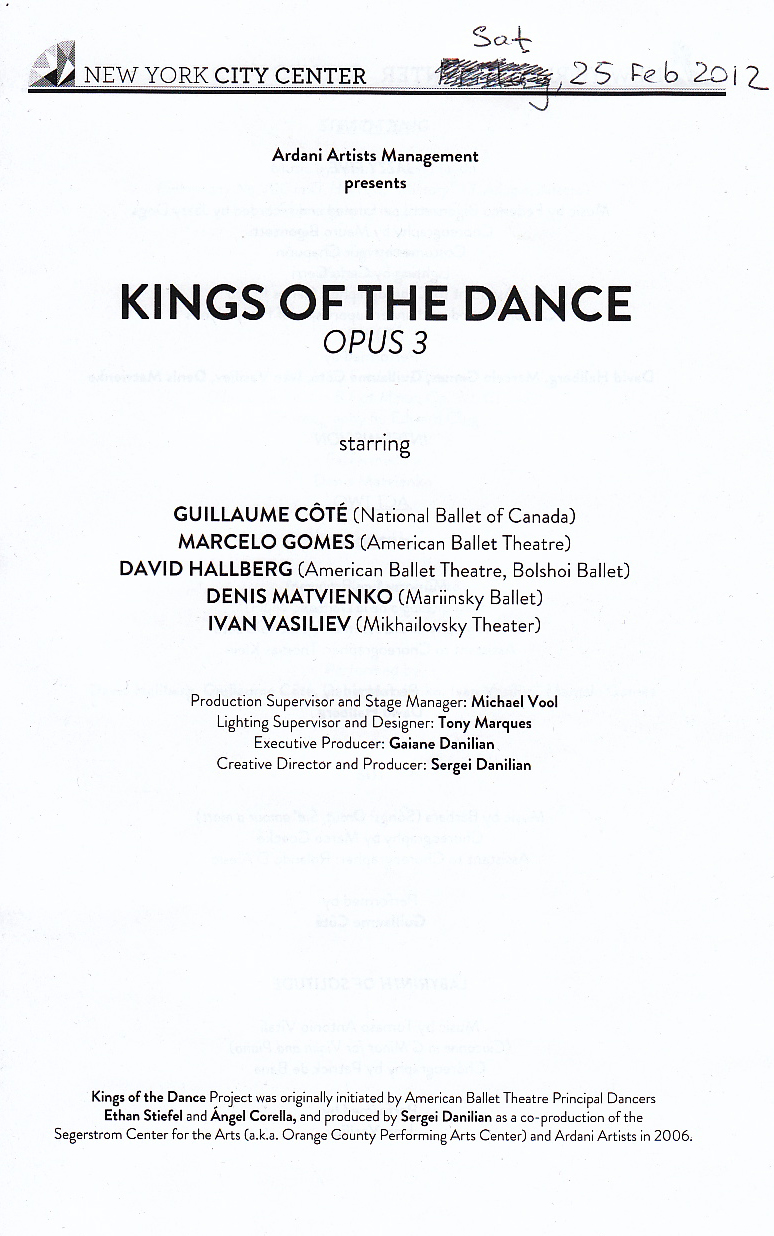
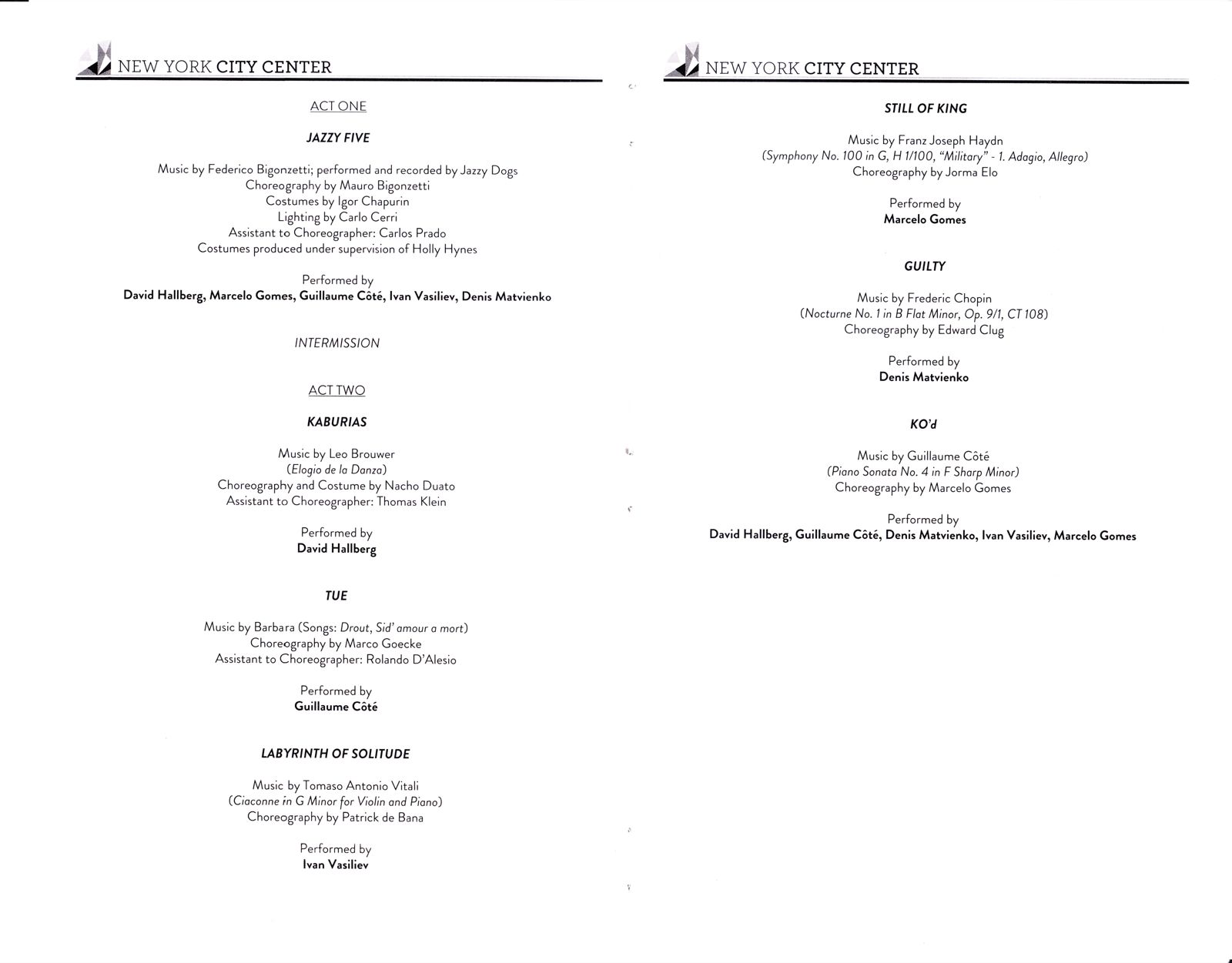
Kings of the Dance, Opus 3 at New York City Center


Tobias, T. (2012), Lèse-majesté, ArtsJournal, February 27, 2012.

Friday, February 24, 2012

Bruckner's Ninth: Two performances 32 years apart


On February 24th, 2012, I attended a performance of the Bruckner's Symphony No. 9 for the second time in my life. It was in New York's Carnegie Hall, and I had the best seat in the house: first row at the first tier on the left. Simon Rattle conducted the Berliner Philharmoniker, and the concert marked the first time the Finale reconstructed from the sketches Bruckner left at the time of his death was heard in the U.S.

Jeremy Geffen and Simon Rattle introduce Bruckner's Symphony No. 9

I've never understood why some find Bruckner's Ninth boring. While quite long (about an hour, without the Finale), to me it always seemed fascinatingly magnetic: once you approach this large celestial body, it pulls you into its gravitational field: you orbit the massive planet and discover its vast valleys, chasms, and mountains opening before your eyes. Each interpretation is like a new orbit in that you see the same landscapes from a different perspective, and thus your exploration is never finished.
As Walter Frisch noted in his pre-concert talk, Bruckner is a two-faced Janus: while his music is firmly rooted in the Viennese tradition of the past, it also anticipates the discoveries of the 20th century. Indeed, Bruckner's Ninth is in D minor, the same key as Beethoven's Ninth; and one cannot help noticing certain similarities between the two. Perhaps, even more striking is its debt to the Schubert's last symphony—“The Great”. Yet Bruckner's music—definitely influenced by Wagner (Bruckner even dedicated his Symphony No. 3 to him) and which, in turn, influenced Mahler—is as rich in its sonorities as Debussy's and Rimsky-Korsakov's, and its unprecedented dissonances and novel orchestration anticipate the innovations of Stravinsky, Schoenberg, and Shostakovich.

Program notes

As I sat in my comfortable chair in the box's front row listening to the fabled Karajan's orchestra, my memories rushed back to another concert that took place 32 years ago, on January 30th, 1980, at the Great Hall of the Leningrad Philharmonic.
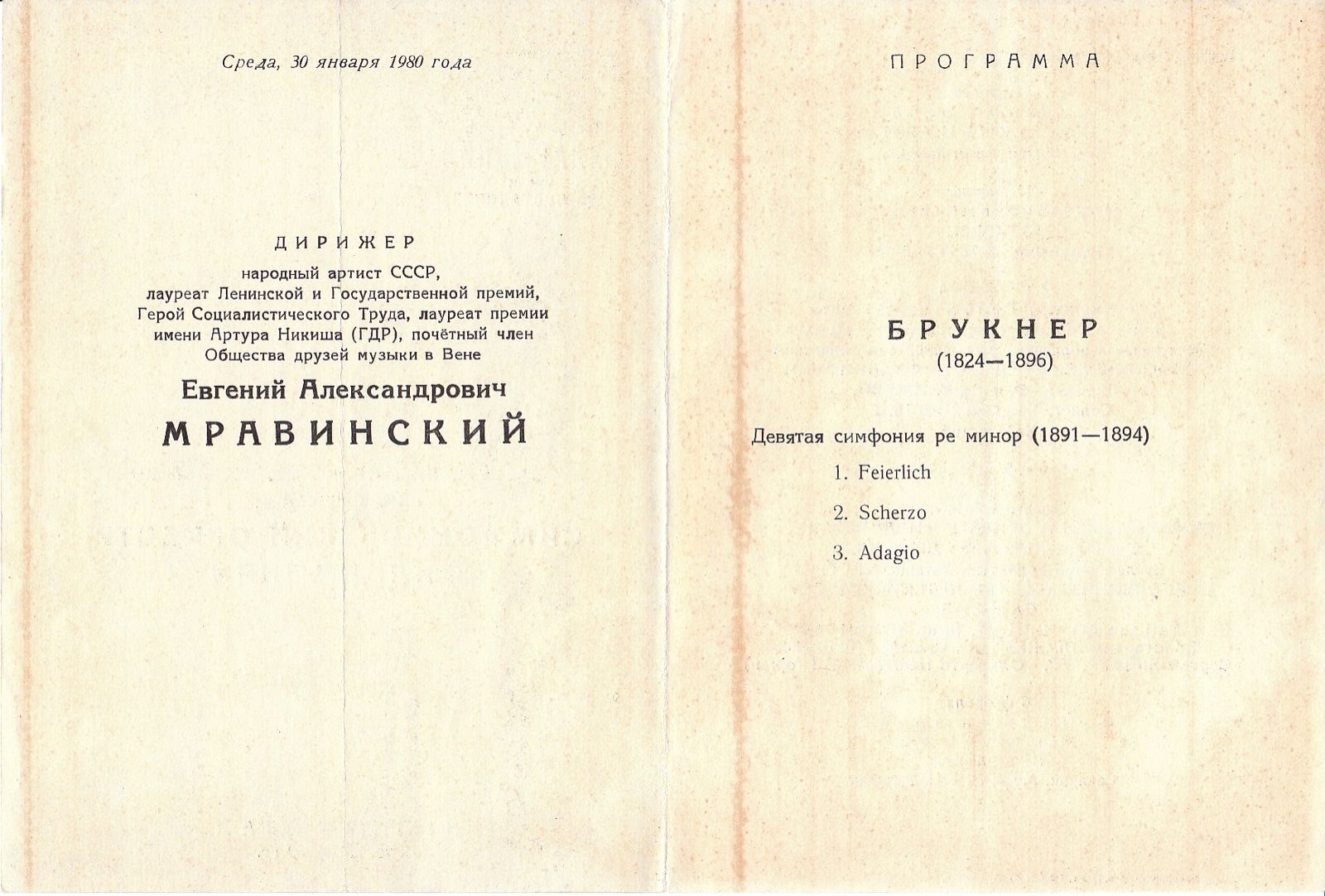
Program notes
It was the first time I saw Yevgeny Mravinsky. I had heard a lot of him from my parents and my brother who had often attended his concerts, and I coaxed my brother into taking me to the performance. It was virtually impossible for people without connections to get seats; the concert was sold out, and we were lucky to get standing room tickets. Fortunately, we came early enough: the gathering crowd of concertgoers was so thick that it was difficult to find a good spot even in the standing room. We found a decent spot behind one of the loges on the left side of the Hall and stood there in anticipation.
One could feel the charged atmosphere: Bruckner's Ninth was performed extremely rarely: the last time Mravinsky played it was—remarkably—in 1945, right after the war. From my spot behind the loge I could see the glitterati, the stars of Leningrad beau-monde, sitting at the first couple of loges on the right: I recognized a famous theater director, a well-known actor, a music director of the Kirov Opera and Ballet…

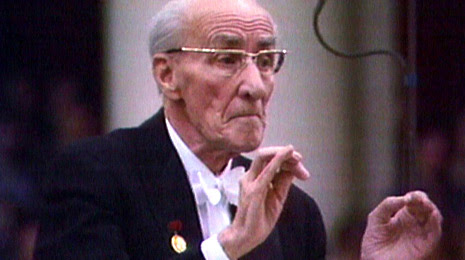
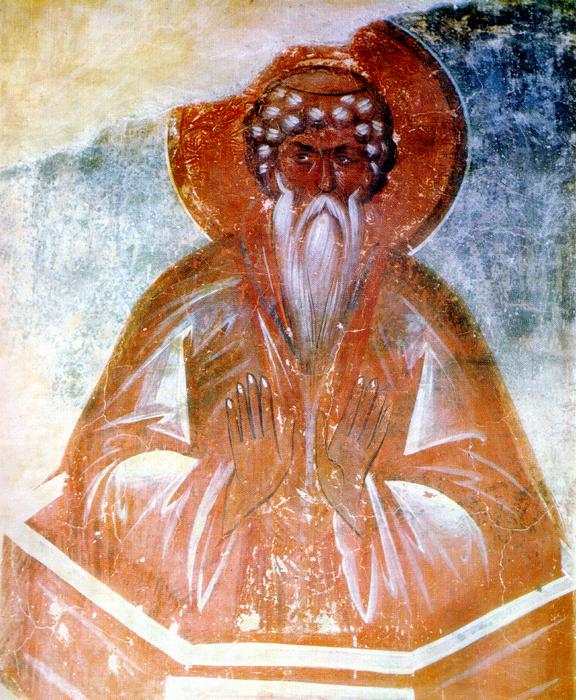
The huge orchestra filed to the stage and took its seats. A moment of silence ensued. Then, with a squeak, the dark-red curtains on the left side of the stage pulled apart and out came Mravinsky. He cut the most extraordinary figure I had ever seen. Extremely tall and gaunt, he slowly walked through the orchestra paying no attention to the thunderous applause greeting him. He seemed to be surrounded by an aura of silent concentration. Having reached the podium, he sat down on a high stool, opened the score, lifted his hands in a gesture reminiscent of the saints in the icons of Theophanes the Greek, and the magic began.

I am not sure “magic” is the right word: I had a distinct feeling that I was witnessing something unique and absolutely extraordinary. It was as if the conductor was literally a conductor—a conduit transmitting the higher truth he managed to attain. It felt like eavesdropping on a communion of a saint with God—with music of the spheres emanating from the 100-strong orchestra.

I did realize that I was witnessing a revelation: every note was worth remembering, and yet the stream of sound was rushing past me; precious music phrases were slipping away, being irretrievably lost forever. I felt that I had to capture, retain them in my memory; I made an effort to do so… and the next thing I remember was being supported by my brother and the muffled commotion of the standing room crowd around me. Apparently, I fainted somewhere in the beginning of the third movement (Adagio), and when I regained consciousness a moment later my brother helped me walk out of the concert hall. It turned out that the Philharmonic kept a medical doctor on duty during public performances. I was escorted to his office, and the doctor, having given me a glass of water with valerian drops, said ruefully, “I hoped, at least today I would be able to listen to the entire concert,” (he sighed) “but no such luck.”

Later I read in the review

that afterwards a poet told Mravinsky: “Tonight you conducted not only an orchestra—you conducted our souls.”

One cannot help but notice certain parallels between Bruckner and Mravinsky. Indeed, after performing the Ninth in Vienna later the same year, Mravinsky—the honorary member of Musikverein—was reverentially referred to as “Herr Bruckner” by the Viennese press. “The spiritual core of and intellectual power of the Bruckner symphonies were central to Mravinsky's ethic as a musician: the power of religion and nature.” (Tassie, G. (2005), Yevgeny Mravinsky: The noble conductor, The Scarecrow Press, Lanham, Maryland, p. 243.)
From Yevgeny Mravinsky: Soviet Conductor, Russian Aristocrat (fragment)

Both men were deeply religious. Bruckner dedicated his Ninth's symphony “dem lieben Gott” (to the beloved God). Mravinsky believed that one ought to play music for God, and that the presence of the audience was incidental; people in the audience being witnesses to the sacred mystery.
From Yevgeny Mravinsky: Soviet Conductor, Russian Aristocrat (fragment)


Luckily, the January 30th, 1980, performance was recorded (first, second, and third movements). Let us compare the two performances: the audio clips below contain recordings of the same fragment: the end of the second movement (Scherzo).
Even though the music fragment is small, the comparison makes it clear that the two interpretations could not have been more different. Obviously, Mravinsky's tempo is noticeably faster. Yet, other differences are more significant: the bow-strokes of the stringed, as well as the phrases of the brass, under Mravinsky are very short, pointed, precise, and restrained, while under Rattle they are longer, more emphatic, and kind-of smudged. That results in a very different tonal quality: while Mravinsky's Bruckner lacks any sentimentality and sounds like a glimpse into the future, e.g., Stravinsky, Rattle's sound is much more Romantic, if not outright romanticized, and his interpretation firmly links the composer back to Beethoven and Schubert.
After listening to the whole symphony, one comes to the conclusion that perhaps the greatest strength of Mravinsky's performance is the perfect balance of its architectonics: that is, a certain inevitability of the progression from the first movement to the second to the third. One gets a sense of the logically unified concept, despite the symphony's considerable duration and the distinct character of each movement. Another striking feature is what Abram Yusfin referred to as the “discernability of music texture,” i.e., the distinct timbral quality of each instrumental group. Mravinsky used the Nowak edition but, according to Tassie (p. 243), facilitated the timbre of brass and woodwind. Other qualities that make the score breathing and alive are the astonishing contrasts of volume, from ppp to fff; the pregnant pauses; and the variability (always warranted and never gratuitous) of tempos and rhythms throughout the entire piece.
Rattle's performance at the Carnegie Hall was very engaging: in no moment did I feel disconnected from the music. Interestingly enough, he conducted the entire symphony, including the new Finale, from memory, without a score. It seems that the first and second movement could use more dynamic variety, in terms of both volume and tempos, and that pauses could have been longer and more imbued with meaning. However, in the first movement, the ritardando combined with diminuendo was amazing, as was the culmination. In the second movement, the precision of the stringed's pizzicato was impeccable, and the unexpected accelerando after the pause, before the final return of the opening theme, was indeed refreshing (this can be heard in the clip above). The highlight of the entire performance though was the Adagio—Bruckner's own “farewell to life.” Rattle achieved an unparalleled cohesiveness of the entire third movement; the perfect balance of sound, tempo, rhythm, and pauses. Music flowed naturally, organically from one contrasting episode to another, inexorably leading through jarring dissonances to an immense culmination that then transfigured into harmonic serenity.
As to the Finale, it was a noble endeavor—and Simon Rattle made a convincing case for it. Indeed, we need to approach the “new” Ninth with an open mind and give the Finale the benefit of the doubt.

However, a work of art, once it parts with its creator, tends to acquire a life of its own; and to me, the Bruckner's Ninth seems no more in need of Finale than the Schubert's Unfinished Symphony or Beethoven's piano sonata No. 32, Op. 111:
We had only needed to hear the piece to answer the question ourselves. A third movement? A new approach? A return after this parting—impossible!
(Thomas Mann, Doctor Faustus, chapter 8)

The Berliner Philharmoniker is one of the world's great orchestras, and the leaders of each instrumental group are formidable musicians. I can't forget the duet of the flutе and double-bass in the third movement or the astonishing vibrato of the cellos in the third. Thus it was indeed gratifying to see Simon Rattle walking over to each orchestral group and thanking them after the performance.
Coming back to comparing the two performances of the Bruckner's Ninth that I heard 32 years apart, again—they could not have been more different. Listening to Mravinsky was like witnessing a divine revelation, like being present at the unfolding of a grandiose mystery. The conductor, like a medium, made the music of celestial spheres audible for us to hear. Listening to Rattle, on the other hand, felt very much like an earthly, grounded experience. There was noting mysterious in his performance; it felt warm and very much human.

Here is the trailer of Simon Rattle conducting the Berliner Philharmoniker (small excerpts from the Bruckner's Ninth).
Here is the Berliner Philharmoniker in eight more recordings of the end of the Scherzo: Wilhelm Furtwängler (1944), Hans Knappertsbusch (1950), John Barbirolli (1966), Herbert von Karajan (1975), Eugen Jochum (1977), Carlo Maria Giulini (1989), Günter Wand (1998), and Simon Rattle (2002).

Corinna da Fonseca-Wollheim, Rattle, Berlin Philharmonic deliver Bruckner's Ninth in all its restored, majestic glory, The Classical Review, February 26, 2012.
Friday, July 15, 2011

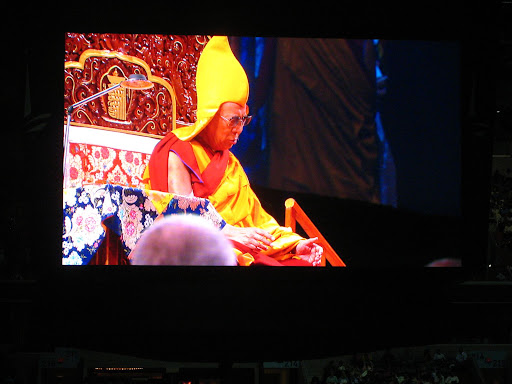
Kalachakra 2011: Day 10. Empowerment

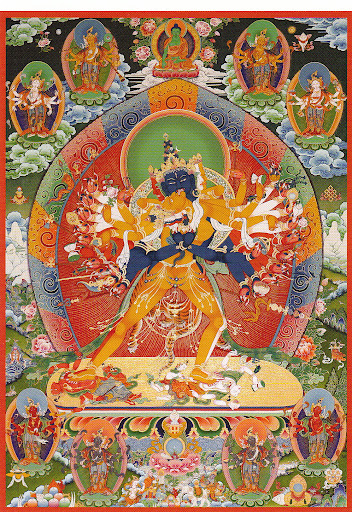
Kalachakra thangka directed by Jhado Rinpoche, painted by Buchung Nubgya

Thursday, July 14, 2011

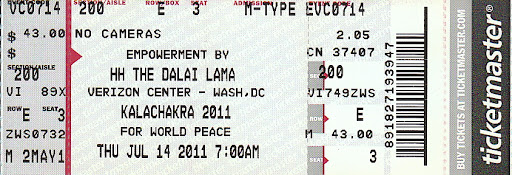
Kalachakra 2011: Day 9. Empowerment


Prior to Empowerment, HH continued Teachings.

[What follows is my incomplete and probably incorrect interpretation]

On the Vajrayana approach to meditation

Common to all Tantra teachings is visualization. In order to invoke subtle mind, the grosser mind should cease. Meditation is a means to perceive ultimate reality and understand its emptiness (voidness). There is no difference between Sutra and Tantra as far as the nature of reality is concerned. The difference comes at the level of subjective experience: one meditates on imagining oneself in a form of a deity. This is only possible by invoking the subtle mind. This is very different from meditating on the nature, let's say, a flower. Even though the ultimate nature of reality (emptiness/clear-light on the external level) is the same, the objects of meditation in the Pali tradition (Theravada) and and in the Tantric tradition (Vajrayana) are different. Both meditate on the void/empty nature of reality but the methods they use differ significantly.

How is Kalachakra Tantra is different from other higher-level Tantras

In the higher-level Tantra there are father-tantra, mother-tantra, and non-dual tantra. Depending on classification, father- and mother-tantras are either considered a subset of non-dual tantra or the latter constitutes its own separate class. [One commentator] establishes correspondence between Kalachakra initiations (empowerments) and the classes of tantra: 2nd initiation relates to father-tantra; 3rd initiation, to mother-tantra; and 4th initiation, with non-dual tantra.

Kalachakra is referred to as explicit (or clear) Tantra, as opposed to obscure (or oblique) ones. The clarity refers to the 4th initiation: in the Kalachakra Tantra, the 4th empowerment is presented explicitly, while in others it is said that it is based on the 3rd, without further elaboration. In other Tantras there are references to rainbow or other subtle bodies but in the Kalachakra Tantra the approach is different: it uses the subtle energy, the clear light. Only in the Kalachakra Tantra the practice involves clear (subtle) Bodhicitta drops (red and white), and from the merge of the two and their dissolving comes the dissolution of the temporal body.

We can distinguish two kinds of emptiness:
  • without aspect, and
  • with aspect (empty form).
Through the cultivation of the empty form one can achieve 3 kinds of bliss:
  1. based on the sexual energy;
  2. mutable (changeable) — via imagining interaction with wisdom, and 
  3. immutable — great seal of empty form.
Through the practice of great seal of empty form one can visualize 21,600 drops arising, which corresponds to 21,600 times we breathe in a 24-hour period.

In other higher-level Tantra practices there are similar practices but what is specific to Kalachakra is that the clear light itself is being used, as oppose to the grosser level of mind.

On the Dzogchen approach

In the Dzogchen approach, using clear mind does not require that the grosser mind ceased its activity. This is an advanced technique, based on fundamental awareness. This is not an easy approach, and practicing it is only possible with a highly qualified Dzogchen teacher/guru.

On authenticity of Vajrayana and Kalachakra

HH then returned to the topic of authenticity of Tantrayana he had partially addressed on Monday, July 11 (Day 6). There are all kinds of questions about Tantric tradition in general and Kalachakra Tantra in particular: Kalachakra is a later text, it could not possibly emanate from the Buddha, where, exactly, Shambala was located, etc. The point, however, is not to take the text literally. Other Buddhist texts mention “pure land” or “copper mountain,” but these are not being interpreted literally. Historical analysis is not a criterion of veracity of teaching. Even in the Sutras the metaphorical interpretation is often required.

Some Indian and Tibetan masters did question the authenticity and validity of Kalachakra Tantra. However, they did so after having themselves practiced the Kalachakra Tantra and having had visualizations based on it.

The Sakya approach speaks of the following sequence:
authentic scriptures --> tradition --> experience.
In practice, the sequence is often the opposite:
experience --> tradition --> authentic scriptures

There are ordinary experiences and extraordinary experiences. In the Tantric (esoteric) tradition you do have extraordinary experiences. You have to trust your teacher, and through your personal experience develop admiration for the great masters of the past. HH reminisced about his conversation, when he was still in Tibet, with a Chinese communist official about whether there is reincarnation. The official said there was not but he admitted he could no prove that. Absence of evidence is not the evidence of absence, so in some circumstances one cannot rely only on reason and needs to have a belief, a conviction. HH then relayed a story about a Kagyu lama who spent time in a Chinese prison and then came to India and participated in the Kalachakra initiation. During empowerment he had a vision of all the masters of his lineage being in one room. There was no reason for that lama to tell untruth, he had nothing to gain. Extraordinary experiences are possible.

HH then said that he has students who gained a great level of insight as a result of Kalachakra empowerment and surpassed himself (“The son is greater than the father,” as an old Tibetan saying goes.)

Ultimately though, one needs to familiarize oneself with different Tantric systems and judge for oneself how effective the Kalachakra Tantra is based on the personal experience.

Evening dharma talk: Robert Thurman

Professor Thurman gave a great talk. He is an engaging speaker with encyclopedic knowledge and volcanic temperament. However, he put forth so much politics that it turned me off, somewhat—even though I agree wholeheartedly with most of what he said. Temperamentally, I feel more comfortable with Dr. Berzin.

Wednesday, July 13, 2011

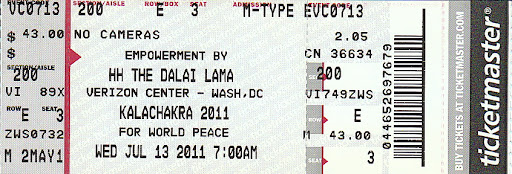
Kalachakra 2011: Day 8. Preliminary Empowerment of Students


HH continued his commentary on Kamalashila's The Stages of Meditation.

[What follows is my incomplete and probably incorrect interpretation]

Shamata and vipassana

Explaining sections on meditating on Calm Abiding (shamata) and Special Insight (vipassana) (pp. 43–45), he said that the key to shamata is to find a proper balance: if your mind is scattered and too agitated you have to calm it down but if you feel too low or depressed you have to lift your mind up by some joyous thoughts. Normally shamata meditation precedes vipassana meditation. Initially you'll be able to concentrate only for a few minutes but if you practice you'll be sustain your concentration for several hours. Higher-level meditators are able to practice shamata and vipassana meditations at the same time.

In regard to the section on Actualizing Special Insight (p.46, last paragraph). “Self” here is used in the sense of self-existence. Some schools of thought maintain that selflessness relates only to individuals while other schools say that selflessness relates to all phenomena.

In any case, the essence of Buddhism is:
  • infinite altruism [method] +
  • recognizing the nature of ultimate reality (whether objective or subjective) which is devoid of its own self [wisdom]
Understanding this give a person a sense of inner strength.

What is specific to Vajrayana (Tantrayana) is the possibility for its follower to unite and perceive method and wisdom in a single mental state (a single cognitive event) and then arise in the form of a deity during the meditation. More precisely, it is the ability for the meditator not only to perceive a deity but to identify with it.

In general, the highest-level Tantras are characterized by indivisible unity of
  • form and manifestation;
  • body and mind;
  • method and wisdom
these are two aspects of the same entity.

There are grosser and subtler levels of mind (or energy). In order to quiet the activity of the grosser mind and access the subtle mind one can employ techniques, such as meditating on pranas (energy channels).

On Vajrayana

The concepts of four types of nirvana (natural, with a residue, without a residue, and non-abiding), as well as the concepts of three kayas (Buddha bodies) can be explained only in the Tantric tradition. By introducing a notion of a clear light mind (basis tantra) Vajrayana brings out the hidden meaning of Buddhist sutras and fosters understanding of the Buddha's enlightened mind.


Evening dharma talk: Bodhicitta

HE Mindrolling Jetsun Khandro Rinpoche gave a talk on Bodhicitta. She is a wonderfully engaging speaker. Below are just a few points I jotted down.

Bodhicitta is awakening mind/loving kindness. The method is to reduce obstacles and increase conditions for happiness.
  1. Inner wakefulness (reflection) —not dependent on external circumstances.
  2. Strength of virtuous attitude (cultivate virtues).
  3. Strength of meditation/contemplation.
  4. The presence of a spiritual teacher.
  • Unconditional love: requires practice and repetition, has to be built up to be sustained.
  • Strong sense of awareness (of self-centeredness, selfishness).
  • Undiminishing aspiration to end suffering of other people.
  • Strong desire to reach enlightenment.
  • Devotion to mindfulness.
Meditation allows one to get in touch with inherent goodness of human beings. We have an ability to do something in order to achieve happiness.

Thoughts and actions:
  • Maintain aspiration
  • Realize the magnitude of suffering, see it, open yourself up.
  • Be joyful: find something good in another person rather than being critical. Cultivate an ability to glimpse something positive and maintain a positive attitude. Accept the world as it is, and not how it should be (in your view)
  • Maintained unbiased attitude. Curb your aggression and ambition.

Tuesday, July 12, 2011

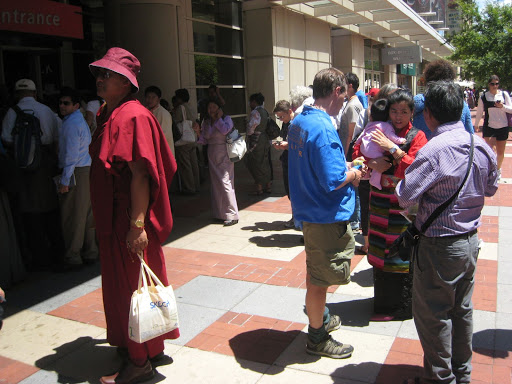
Kalachakra 2011: Day 7. Ritual and Offering Dance


Interestingly, dancing and—especially—singing of a different kind (the group was performing in front of the main stage) were incorporated into the service. The resulting combination of the ostinato chant and weaving melody (video 4), as well as the soaring solo (video 6), were stunning.


Evening dharma talk: Deepening your Kalachakra Views: The Mandala, The Cosmology, The Deities, and the Meaning
The talk Deepening your Kalachakra Views: The Mandala, The Cosmology, The Deities, and the Meaning featured Alexander Berzin (Cosmology), Vesna Wallace (Mandala), and Sofia Stril-Rever (Meaning), and was moderated by Robert Thurman.

The Berzin Archives site contains a wealth of information, primarily on the Mahayana and Vajrayana traditions of Tibetan Buddhism.

See also:
http://www.religion.ucsb.edu/Faculty/wallace.htm and
http://kalachakranet.org/book_vw-inner.html (Vesna Wallace);
http://www.buddhaline.net/spip.php?auteur63 (Sofia Stril-Rever)

Monday, July 11, 2011

Kalachakra 2011: Day 6. Preliminary Teachings


Teachings on Acharya Kamalashila's Stages of Meditation (Gomrim Barpa), Gyalse Ngulchu Thogme's Thirty-seven Practices of a Bodhisattva (Lagden Sodunma), and Geshe Langri Thangpa's The Eight Verses of Mind Traininng. Day 3

The afternoon began with the recitation of sutras in Japanese and Vietnamese.


[What follows is my incomplete and probably incorrect interpretation]

As was noted on the first day of teaching, internal essence (“self”) has no beginning and no end. Similarly, external phenomena have no beginning or end either. For example, there is no reason to think that there was only one big bang, it stands to reason that there were and there will be an infinite number of big bangs.

Liberation from suffering

One has to look beyond appearances and recognize reality. Appearances are illusions; once this is understood the attachment/clinging/grasping, as well as resulting negative emotions (anger, fear, jealousy, etc.) are dispelled.

The liberation from suffering is possible because the basic nature of the mind is pure. Practically, to effect this change, one has to:
  1. avert acts of destruction;
  2. let go of grasping to your identity;
  3. let go of clinging to external things.
As was noted yesterday, there are two kinds of suffering. Avoiding 10 non-virtues, which is common to all great religions, is to free yourself from the first kind of suffering. This avoiding de-merit, avoiding negative actions can be achieved by modifying your behavior.

On wisdom

The main obstacle to liberation though is distorted ignorance (“mis-knowing”). All negative emotions are caused by it, i.e., by self-clinging, self-attachment. To overcome that, one needs to dispel distorted ignorance, i.e., one needs wisdom.

There are three levels of wisdom:
  1. sensory-based;
  2. reason-based; and
  3. internalized.
Wisdom is achieved through meditation. To achieve concentration, one needs quietness, noiselessness (which is difficult to find in a big city). The meditation should be single-pointed, which implies introspection, mindfulness, and concentrating on an object. Mind has to be sharp but relaxed. Meditation skill allows us to perform self-observation, to check whether our actions are right.

samadhi (meditation) = morality + meditation + wisdom

This is common to all three Buddhist traditions. The differences are contextual, they are only distinction of emphasis.

On the role of Tantric tradition in Buddhism

HH then addressed the issues that are sometimes being raised related to “legitimacy” of the Mahayana and Vajrayana traditions. Some question whether Mahayana was taught by the Buddha. Others say that if the Buddha came to Tibet and observed the Tantric tradition he wouldn't recognize his own teaching.

Mahayana tradition is based on Theravada, and developed it further using the notion of infinite altruism (Bodhicitta). As far as Vajrayana is concerned, there is a source and foundation of the Tantric principle in the Sanskrit tradition. The contribution of the Tantric tradition is the notion of subtle energy. Without that notion it is difficult to explain the nature of achieving Buddhahood. The important consideration here is not to be bound by the conventional notion of time: the historic Buddha may not have taught Tantra directly but Buddha is eternal. The whole point of Buddhism is that the physical death of the historical Buddha was not the end. (Here HH relayed a story about a Theravada monk who had a visual experience of the Buddha.)

On altruism

Thus one of the main precepts of Mahayana and Vajrayana is altruism.
One has to practice selflessness, which can be of two kinds:
  1. intuitive altruism; and
  2. recognition of interdependent existence.
(An aside: In Buddhism there are no absolutes. Even an absolute devotion to god may become a hindrance on the path of liberation.)

Altruism is not hard to understand but difficult to experience. There are two methods of practicing altruism:
  1. treat others like people we love;
  2. eliminate self-centeredness, recognize that there is no “I”
The second method will banish anger, hatred, jelousy, and rid you of fear. It will fill you with self-confidence and bring you more friends. Egoism make one stiff.

As soon as selfishness is gone there is no hypocrisy, and all moral principles, like 10 Commandments are observed willingly, and not out of fear.

On strength of keeping your mind calm

Stanza (14). If your enemy has succeeded in provoking your anger, if he has made you lose your temper then the enemy has defeated you. But if your mind remains calm then the enemy has failed. (Here HH relayed a story from his childhood about an old Tibetan official who was famous for his humility: the angrier his adversary was the more serene he became. And then he struck back, at the right moment. That's a sign of strength.) Keep your mind peaceful; then it is not impossible that your worst enemy will become your best friend.

Remaining stanzas of The Thirty-seven practices

Stanzas (18–19). When one goes through the hard period on is in danger of losing optimism/hope. If one's life is very successful then he is in danger of becoming arrogant/conceited.

Stanza (22). Meditation on emptiness.

Stanzas (23–24). In the after-meditation state one has to cultivate awareness of illusion.

Stanza (25). Practice of six perfections, beginning with generosity.

Stanza (31). You have to continually examine your own confusion, check whether we follow the right path. That requires self-discipline and involves watching over verbal, physical, and mental actions.

That was the end of exegesis on The Thirty-seven practices of a Bodhisattva by Gyalse Ngulchu Thogme.


The Eight Verses of Mind Training

HH then turned to The Eight Verses of Mind Training by Geshe Langri Thangpa (p.53) that he has known by heart since childhood. (He said that he doesn't get frustrated when there are flight delays: he occupies his mind with these verses.)

Modalities of perception of the world

There are two kinds of awakening mind, conventional and ultimate. As far as ultimate awakening mind is concerned, one can distinguish three kinds.
  1. Non-conceptual (sensory). This one is non-selective, immediate: it engages with whatever is in the field of vision.
  2. Conceptual (reasoning). This one is selective — does not engage with the object directly.
  3. Highly selective. This one operates on the mental level and chooses its objects. However, it tends to conflate time, e.g., “Is this the same thing I saw yesterday?”
On meditation

HH then spoke about meditation. Normally attainment of shamata (calmness) precedes vipassana (insight); however, in higher Tantras there are practices to meditate on both:
  • union of bliss an emptiness (Gelug);
  • union of samsara and nirvana (Sakya).
Coming back to Kamalashila's The Stages of Meditation (p 44, column 1, last paragraph), HH stressed the importance of the correct posture and said that breathing meditation can be helpful if your mind is distracted or agitated.

The object you concentrate on should be in your mind's eye. Visualize it. The image will become bright. Then you visualize yourself as a deity (Vajrayana) or as a chakra (Mahayana). Do not think about past or future. You should feel empty, no external stimuli or internal feelings.

Perception is not mirroring, it is taking one aspect of an object and constructing “knowing,” or understanding. There are different views on the nature of perception: is it a unitary moment or a multi-aspect/multi-stage process?

When we stop thinking of past and future this is a moment of nothingness. Prolong that and experience luminosity, the ultimate reality of the mind. Concentrate on that for as long as you can. Then take *that* and investigate; meditate on what is mind.

Your own breathing is a useful object of meditation. Concentrate on breathing. (Here HH engaged the audience in a breathing exercise.)

Chanting is a form of mediation too. One can visualize each word and continue doing so for many hours. This can train and discipline your mind, so that then you go to a subtler objects.

[This last day teaching felt special: HH talked about both rather abstract and rather personal matters.]


Evening dharma talk: Buddhism, Empowerments, and Everyday Life

The venerable Thubten Chodron gave a talk on Buddhism, Empowerments, and Everyday Life. She made several really great points. For example, when you realize that clinging to your constructed or imposed identities really makes your life unnecessarily difficult renouncing those identities can be truly liberating and can make your life much easier. Imagining yourself as a deity, e.g., Kalachakra, makes you free of fear so that you can aspire to act and think as an enlightened being would.